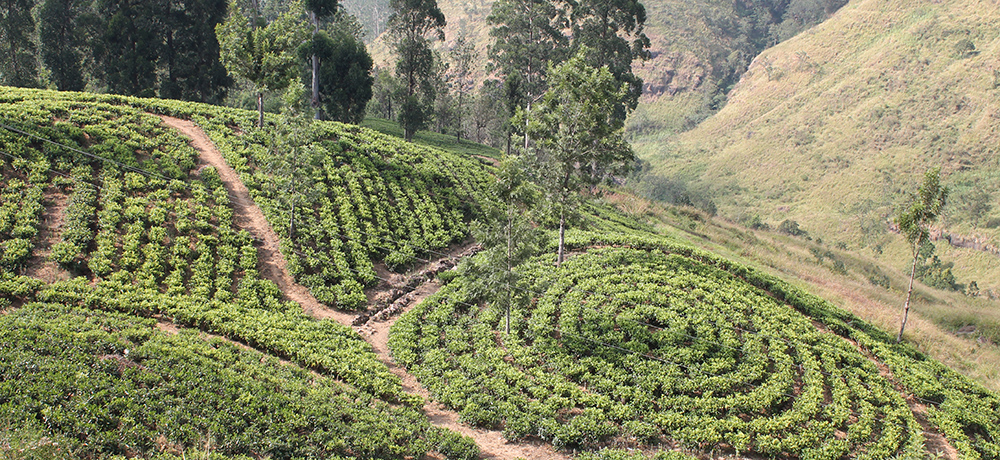
Sri Lanka tea plantation
CTBI has been supporting a project with the National Council of Churches in Sri Lanka (NCCSL) entitled The Reconciled Land: A Theology of Land at the Nexus of God, People and the Environment. It aims to build on the historic links between churches in Sri Lanka and those in Britain and Ireland, helping both CTBI and NCCSL to widen the perspectives that shape and inform their work. The project has a particular focus on deepening the theological reflection that shapes and inspires the churches’ work for peace and healing of relationships in both contexts, drawing on social analysis and action learning generated by the community-based dialogues facilitated by NCCSL around issues of land and belonging.
Political instability has been a long-standing barrier to the work of peace and reconciliation in Sri Lanka and many of the groups NCCSL is supporting through the Reconciled Land project are alienated from the political system and political processes. Recognising the importance of political participation and the need for political leaders that work to protect and promote the common, NCCSL has been engaging in advocacy and public education as a contribution to the public debate on these questions in Sri Lanka.
September 2024 saw the first presidential elections in Sri Lanka since the mass protests in 2022 that led to the ousting of the then president, Gotabaya Rajapaksa, in the context of a widespread and severe economic crisis. These elections were preceded by a ruling of the Supreme Court on the necessity of an election, which was welcomed in a statement of NCCSL: “ Regular, free and fair elections are a crucial feature of a democratic society and it is essential for people to exercise their franchise.”
The statement went on to make an appeal for collective responsibility, calling on the people of Sri Lanka “to exercise their sovereignty, which includes fundamental rights and the franchise, with diligence and responsibility. This requires the people to be informed about the political and economic crisis facing the country and to critically assess the parties and the candidates seeking election at the presidential and parliamentary elections that are likely to follow. This is an essential feature for a constitutional, multi-party democracy.”
The statement placed strong emphasis on the impact of politics and political culture on the socio-economic conditions that impact the life of communities, with an unequivocal condemnation of the corruption and failures of accountability that have been “corrosive” to Sri Lankan society. It challenged all participants in the election to commit to the necessary reforms to address these failures and promote accountable democratic institutions, including the reform of the presidential office itself.
The work done by NCCSL in the Reconciled Land project finds expression in the statement with a broad recognition of the connection between inclusive and accountable politics and the work of peace and reconciliation, as well as highlighting the needs of particular groups supported by the project, such as the Tamil community in the North and East, and the Malayaha Makkal community of plantation workers: “There must be genuine initiatives to respond to the consequences of the ethnic conflict and war, such as enforced disappearances, justice to political prisoners, acknowledgement and accountability for killings, sexual crimes and other serious wartime atrocities. It must also include addressing ongoing violations, including continuing occupation of lands by the military and various government agencies, obstructions, restrictions and intimidation in remembering the war dead, and the suppression of dissent. Therefore, the NCC calls upon all candidates to clearly state their policies to address and permanently resolve the long festering ethnic conflict, which now remains unresolved even 15 years after the end of the war.”
The statement was closely followed by the publication of guidance when the election date was announced. The guidance highlighted policy areas for Christians to consider when casting their votes including political reform, economic justice, peace and reconciliation, strengthening the rule of law, workers’ rights, environmental projections and a range of other human rights issues.
When the election of Anura Kumara Dissanayake was announced the NCCSL published a message of congratulations with a heartfelt appeal for integrity, partnership and action on matters of social justice:
“We trust that President Dissanayake will embrace his role as a leader for all citizens, including ethnic and religious minorities and the many marginalized communities, as well as those who did not support him. The people are eager for clear, transformative change, particularly in addressing our nation’s heavy debt and establishing a robust, inclusive, and just economic program. It is crucial that the administration prioritizes the voice of the people over party politics, ensuring that reforms genuinely reflect the needs of the populace rather than mere change for its own sake.”
The full text of these statements, together with other communications and material for reflection on these themes produced by NCCSL can be found on their website: www.nccsl.org.
It is a privilege for us in CTBI to support and promote this courageous, hope-filled work by our partners in Sri Lanka. Please remember in prayer our partners in Sri Lanka and the communities they serve through the Reconciled Land project as they work to create the conditions that will promote peace and contribute to reconciliation and healing, offering a much-needed hope for a better future.
Dr Nicola Brady, General Secretary Churches Together in Britain and Ireland.


